

Type
Course
An integrated approach to building health systems resilience
Emplacement
Web-based
Durée
5 Hours
Domaine du programme
Other
Site internet
Prix
0.00 $US
Email du point focal de l’événement
globalhealth@unitar.org
Inscription
Open-registration event
Modalités de prestation
E-learning
Langue (s)
English
Pilier
The Defeat NCD Partnership
Objectifs du cours
- Incorporate the attributes of a resilient health system into relevant policies, plans, and actions;
- Apply an integrated approach to building health systems resilience as a requirement for UHC and health security;
- Advocate for and foster the implementation of the key requirements for building health systems resilience against various risks and shocks.
Contexte
Public health emergencies and other forms of health systems shocks continue to underscore the need for more resilient health systems as a requirement for universal health coverage and health security, and promoting a healthier population. A major challenge in building health systems resilience is the prevailing fragmentation in health systems strengthening and public health efforts.
Contenu et structure
Addressing the challenge requires decision makers and managers for individual and population health services to have the knowledge and skills to identify and apply an integrated approach to making health systems and services resilient to public health threats. This course explores key requirements for enabling health system resilience with an integrated systems approach.
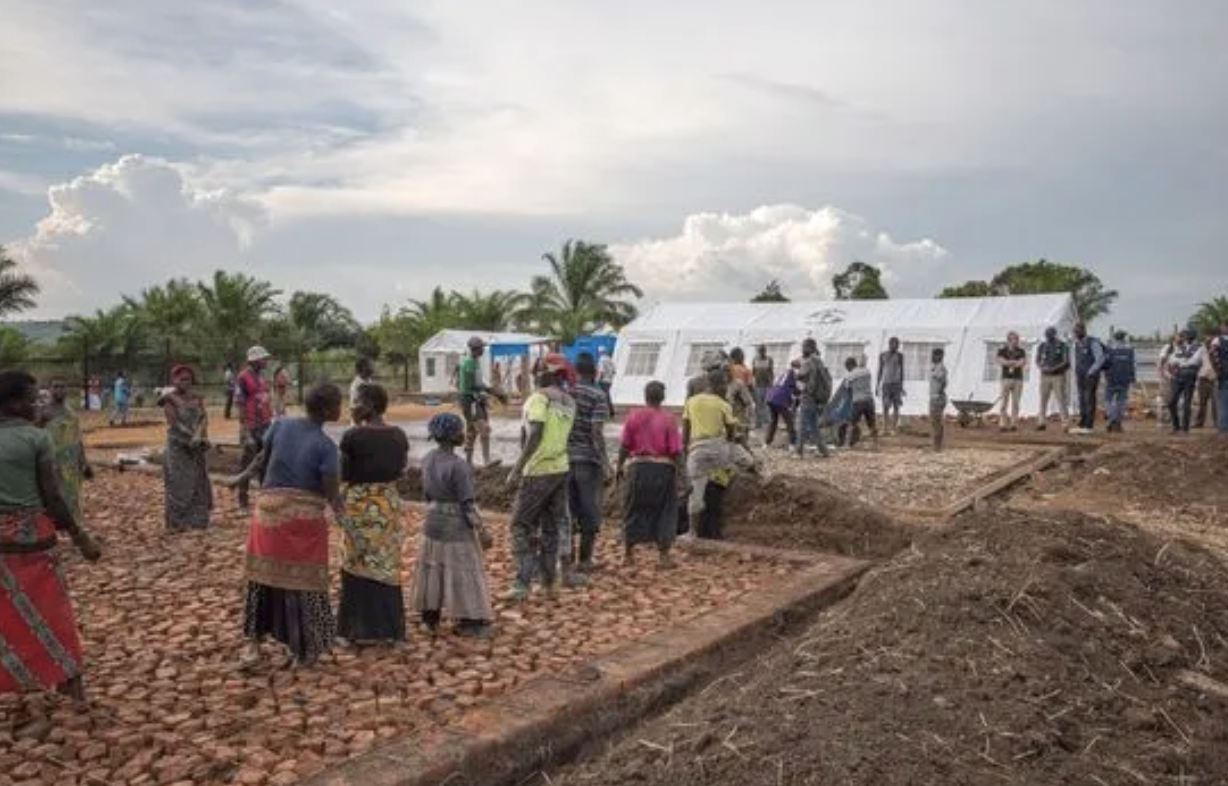
Photo credits: WHO / L. Mackenzie
Health systems continuously face various forms of public health challenges ranging from acute shocks (such as infectious disease outbreaks. and environmental, climate-related and/or man-made disasters) to more chronic stressors (such as the burden of non-communicable diseases, antimicrobial resistance, or protracted humanitarian crises). In these contexts, health systems struggle to maintain their essential individual and population-based health services and recover from the impacts of the shock events. This predisposes to additional deterioration in health and socioeconomic outcomes with setbacks in achieving universal health coverage (UHC) and health security goals.
WHO recommends a renewed and increased focus on building resilience by addressing the critical gaps that make health systems vulnerable to public health threats. A combination of integrated approaches and actions are required to demonstrate health systems resilience attributes across policymaking, planning, service delivery, and monitoring and evaluation efforts. These include applying systems thinking and essential public health functions approaches, with improvements in quality of care and all hazards emergency risk management.
Méthodologie
Approximate course duration: 5 hours.
Languages: This course is available in the following languages: English
Content Warning: This course may contain images, videos, and multimedia materials related to healthcare that may include graphic depictions of medical conditions, surgical procedures, and other clinical content. These materials are intended for educational purposes to enhance understanding of real-world medical scenarios and are essential for the comprehensive learning experience.
Assessment & Awards
You will receive a Confirmation of Participation upon completing all the modules in this course. Please note that this award does not serve as a professional qualification.
Audience cible
The target audiences for this course are decision makers of public health policy, and managers of health services at national, subnational and community levels.
Informations supplémentaires
Guidance note
The content of this course has been validated, verified, and is owned by the Health Systems Resilience and Essential Public Health Functions Team. This course is not a WHO Academy co-produced course. In case of any concerns or feedback on the course content, please share your feedback in the survey form at the end of this course.
Browser and device compatibility
For the best experience, we recommend using the latest version of Chrome, Firefox, Safari, or Microsoft Edge to access the courses.
Produced by Health Systems Resilience and Essential Public Health Functions Team.
Protection des données et confidentialité
Les données personnelles des participant·e·s qui postulent, s’inscrivent ou participent aux formations et autres événements de l’UNITAR sont régies par la Politique de protection des données et de confidentialité. En postulant, en s’inscrivant ou en participant à cet événement, le ou la participant·e reconnaît avoir pris connaissance de cette politique et en accepter les conditions.