

Type
Course
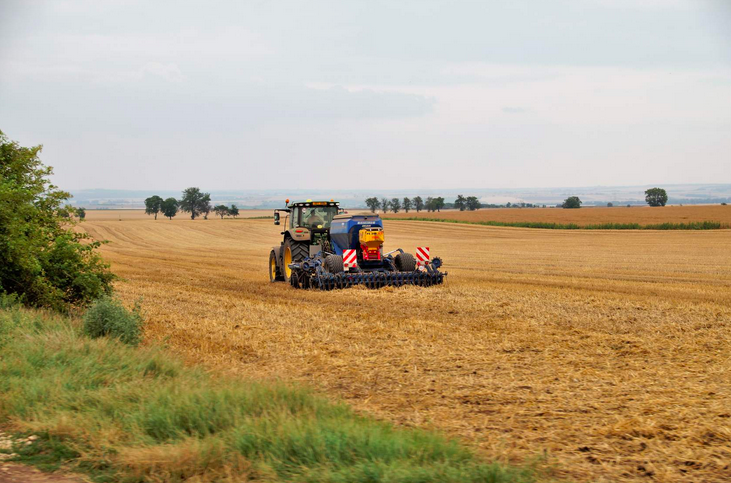
Climate-Smart Agriculture in South Africa
Emplacement
En ligne
Durée
1 Jours
Domaine du programme
Climate Change
Site internet
Prix
0.00 $US
Email du point focal de l’événement
info@unccelearn.org
Inscription
Événement en inscription ouverte
Modalités de prestation
Formation en ligne
Langue (s)
Anglais
Partenariat
Department for Forestry, Fisheries and the Environment in South Africa, United Nations Environment Programme (UNEP), Switch Africa Green Programme of the European Union
Objectifs d'apprentissage
Why take this course?
The course aims to raise the awareness and strengthen the capacities of key stakeholders in South Africa on the concepts, approaches, and tools for enabling climate-smart agriculture in the country.
At the end of the course learners will be able to:
- Explain what climate-smart agriculture (CSA) is, its main principles, objectives and benefits
- Identify critical social, environmental, and economic opportunities for CSA in South Africa
- Describe applications of CSA in various agricultural domains, such as livestock and croplands
- Discuss the role of remote sensing and identify practical steps to apply CSA in South Africa
- Discuss enabling conditions for the adoption of CSA in South Africa
Contenu et structure
The course at a glance
-
1. Principles of Climate Smart Agriculture
The first module provides the rationale and key concepts related to climate change and climate-smart agriculture. It also provides an overview of South Africa's agricultural sector.
-
2. Climate-Smart Crop Production
The second module explores how CSA differs from mainstream agriculture in crop production and why it is essential to adopt CSA given the impact of climate change.
-
3. Climate-Smart Livestock Production
The third module focuses on livestock production. It explores the importance of livestock production for food security, the link between climate change and livestock production, ways to adapt livestock production to climate change.
-
4. Climate-Smart Remote Sensing
The fourth module introduces basic remote sensing concepts and their application in the agriculture domain.
Méthodologie
Get your Certificate
Participants must complete the final course assessment to receive a Certificate of Completion. To complete the test learners are allowed 3 attempts; a grade equal to or higher than 70% constitutes a passing grade.
Protection des données et confidentialité
Les données personnelles des participant·e·s qui postulent, s’inscrivent ou participent aux formations et autres événements de l’UNITAR sont régies par la Politique de protection des données et de confidentialité. En postulant, en s’inscrivant ou en participant à cet événement, le ou la participant·e reconnaît avoir pris connaissance de cette politique et en accepter les conditions.