

Type
Webinar
UNITAR RISE-LAB 2026 Sudan Phase One: (Webinar 3) From Vision to Execution
Location
Web-based
Date
Duration
2 Hours
Thematic Area
Entrepreneurship
Registration
Application-based event
Mode of Delivery
E-learning
Language(s)
Arabic,
English
Pillar
Prosperity
Event Objectives
The webinar aimed to strengthen participants’ ability to translate entrepreneurial ideas into practical action. It introduced simple methods for defining a project, organising the resources needed, coordinating implementation and sustaining operations after launch.
The session also aimed to help participants establish manageable working systems, clarify responsibilities and respond to delays or changing conditions. It connected structured project management with innovation, encouraging participants to develop creative solutions while maintaining clear goals, regular communication and measurable progress.
Background
The webinar “From Vision to Execution: Practical Project Management for Entrepreneurs” introduced a practical framework for turning business ideas into organised, achievable projects. Presented by Lynn El Berjawi, Food Safety and Innovation Expert, the session explored how entrepreneurs can manage resources, people, time and tasks while remaining adaptable as circumstances change.
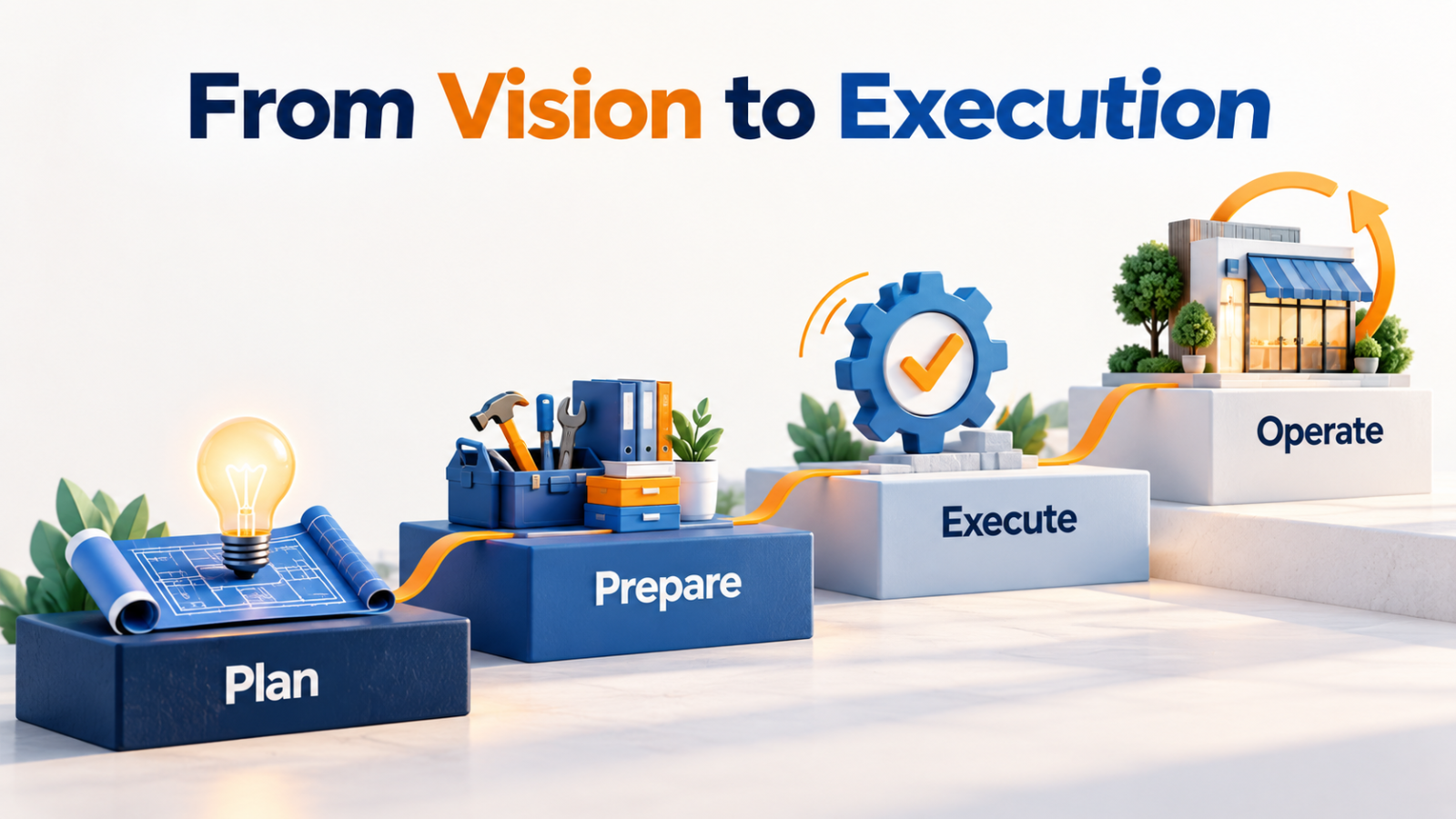
The session addressed challenges such as competing priorities, unclear responsibilities, unrealistic timelines and gaps in preparation. It organised project delivery into four stages: Plan, Prepare, Execute and Operate. Innovation was presented as a continuous part of this process, including improvements to products, working methods, partnerships, business models and customer experiences.
Learning Objectives
By the end of the webinar, participants were expected to be able to:
- Explain the purpose of project management and distinguish the Plan, Prepare, Execute and Operate stages.
- Define a project goal, identify stakeholders, set the scope and establish realistic milestones within available resources.
- Select simple tools for tracking tasks, responsibilities, timelines, decisions and project risks.
- Describe how to coordinate implementation, communicate changes and use testing and feedback to improve delivery.
- Identify operating routines and key performance measures that support a business after launch.
- Develop a one-page project roadmap covering all four stages and incorporating one innovation element.
Content and Structure
The webinar opened with an innovation challenge in which participants were asked to create a product idea using three items already on their desks, without buying anything or searching online. Participants were invited to share their ideas in the chat and reflect on their decisions, planning and time management. The exercise introduced the difficulties that arise when goals, resources and a clear approach have not been established.
The session then defined project management as organising resources, people, time and tasks to turn an idea into reality in a clear, trackable and adaptable way. Drawing on the presenter’s experience in auditing, consulting and culinary innovation, it introduced a four-stage framework applicable to products, services, food businesses and other entrepreneurial projects.
The Plan stage focused on defining the goal and what success would look like, identifying stakeholders, setting the scope and establishing realistic timelines. It also addressed constraints, resources and risks. Suggested tools included a one-page project brief, a mind map and a milestone timeline developed by working backwards from the intended launch date.
The Prepare stage examined how to organise people, equipment, funding and information before implementation. It covered roles and decision-making responsibilities, progress tracking, communication arrangements, simple standard operating procedures, checklists and contingency plans. Practical tools included a task tracker recording the owner, deadline and status of each task, a Gantt chart showing dependencies, a regular review schedule and a decision log.
The Execute stage addressed starting with achievable tasks, following the plan flexibly and coordinating work across different areas of the project. It emphasised communicating changes promptly, testing ideas, gathering user feedback and documenting decisions and lessons. An example of delayed equipment illustrated the need to adjust timelines and inform stakeholders when circumstances change.
The Operate stage focused on keeping the business functioning and improving after launch. It introduced daily checklists, weekly scorecards, monthly reflection and a continuous improvement log. Participants were encouraged to select a small number of relevant measures, such as sales, waste, customer satisfaction, delivery time or user engagement, and to use feedback when planning improvements and future growth.
The session then explored innovation across all four stages. Examples from culinary innovation work included partnerships with global chefs, programmes combining research and development with entrepreneurship, and facilities serving training, research and events. These examples illustrated how clear responsibilities and organised implementation can support creative approaches.
The final practical activity asked participants to choose one project and create a four-stage mini roadmap. The outline covered the goal, people involved and timeline; required resources and systems; the first three implementation tasks and responsibilities; and measures of success during operation. Participants were asked to add one innovation element, work individually for ten minutes and share their outline through the chat or a short spoken contribution. The presentation closed with key messages and an invitation for questions.
Methodology
The webinar combined an opening innovation challenge, guided reflection, practical explanations and examples from the presenter’s professional experience. Questions about participants’ choices and time management connected the opening activity to the need for project planning and preparation.
The session introduced accessible tools that could be used on paper or through familiar applications such as spreadsheets and shared documents. A ten-minute individual exercise enabled participants to apply the framework to their own project, followed by opportunities to share their plans and discuss their chosen innovation. The presentation also included a closing questions segment.
Targeted Audience
Participants in the UNITAR RISE-LAB 2026 programmes for Sudan and South Sudan, including aspiring entrepreneurs and existing business owners seeking to launch a product or service, organise business activities or improve project implementation.
Additional Information
The session was presented by Lynn El Berjawi, Food Safety and Innovation Expert. Its central message was that entrepreneurs can begin with simple tools and consistent practices, while adapting their plans as they learn. It emphasised the importance of preparation, communication and ongoing operations alongside the initial launch.
The webinar contributes to UNITAR RISE-LAB 2026 by strengthening participants’ ability to implement business ideas and manage enterprise activities. The programme is delivered by UNITAR’s Division for Prosperity with support from the Government and People of Japan.
Data Protection and Privacy
The personal data of participants applying for, registering for or participating in UNITAR's training courses and other events is governed by the Data Protection and Privacy Policy. By applying for, registering for or participating in this event, the participant acknowledges that he or she is, (or they are) aware of the policy and agree to its terms.