
Type
Other
CIFAL Brussels - SDG Action Learning Series - Q1
Location
Antwerp, Belgium
Date
-
Duration
1 Days
Thematic Area
Decentralize Cooperation Programme
Registration
Invitation-only event
Mode of Delivery
Face-to-Face
Language(s)
Dutch
Pillar
People
Partnership
CIFAL Flanders, Flemish Government
Event Objectives
Event objectives
- Strengthen institutional understanding of ESG, CSRD, EU Taxonomy, and sustainability reporting frameworks.
- Facilitate exchange of experiences and good practices related to sustainable development implementation.
- Promote collaboration among public institutions, private sector actors, and sustainability experts.
- Enhance knowledge on circular economy, responsible procurement, climate action, and sustainable governance.
- Support organizations in translating sustainability ambitions into practical implementation strategies.
Learning objectives (Only for training-related events where learning is central)
Participants will be able to:
- Identify key sustainability reporting frameworks and regulatory developments at the European level.
- Analyze practical approaches to ESG integration and sustainable governance.
- Apply sustainability tools and methodologies within organizational contexts.
- Strengthen collaboration and stakeholder engagement related to sustainability implementation.
Background
The Learning Network Sustainable Development Flemish Agencies and Entities (hereafter referred to as LNSD Flemish Agencies and Entities) builds on a strong network of Flemish public institutions brought together by CIFAL Brussels. It connects departments, agencies, and public entities with extensive sustainability expertise and hands-on experience. Through a structured learning programme, participants exchange best practices, inspire one another, and collaborate more efficiently on sustainability initiatives. The network promotes knowledge sharing, avoids duplication of efforts, and supports the uptake and scaling of successful practices. The preparation and delivery of the sessions take place in close cooperation with DKBUZA.
Learning Objectives
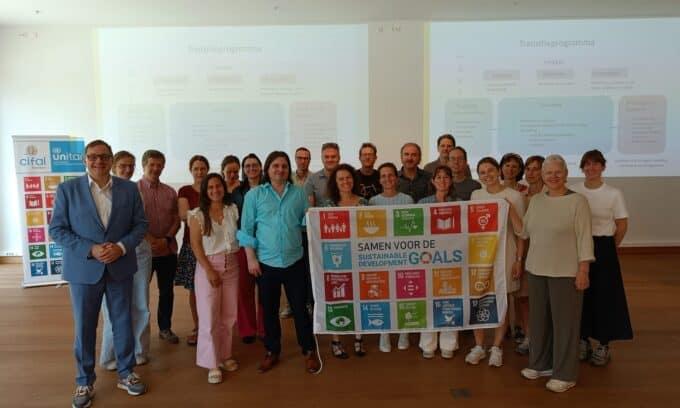
The visit allowed for members of Flemish agencies and entities to learn more about this circular economy site in Antwerp. Through an onsite tour, presentations, Q&A sessions, and informal networking, they gained a deeper understanding of their work and explored meaningful ways to collaborate
Content and Structure
The programme consisted of four thematic sessions covering:
- Responsible public procurement tools
- Corporate Sustainability Reporting Directive (CSRD)
- EU Taxonomy and ESG frameworks
- Sustainability strategies in tourism and audiovisual sectors
- Circular economy and environmental management systems
- Sustainable storytelling and communication
- Sustainable development reporting and SDG monitoring
- COP29 debriefing and international sustainability developments
- Climate governance and transition policies
- Education and behavioral change for sustainability
Methodology
- Expert presentations and technical briefings
- Interactive workshops and group discussions
- Case-study analysis and institutional showcases
- Peer-learning and knowledge exchange
- Multi-stakeholder dialogue and collaborative learning approaches
Targeted Audience
- Sustainability professionals
- Public administration representatives
- ESG and CSR practitioners
- Policy advisors and government officials
- Corporate sustainability managers
- Researchers and academics
- Environmental and circular economy experts
- Private sector representatives
- Civil society organizations
Data Protection and Privacy
The personal data of participants applying for, registering for or participating in UNITAR's training courses and other events is governed by the Data Protection and Privacy Policy. By applying for, registering for or participating in this event, the participant acknowledges that he or she is, (or they are) aware of the policy and agree to its terms.