
Tipo
Course
Reshaping our Economies
Ubicación
Web-based
Duración
5 Horas
Área del programa
Environment
Sitio web
Precio
0,00 US$
Correo Electrónico del Centro de Coordinación del Evento
info@unccelearn.org
Inscripción
Open-registration event
Tipo de aprendizaje
E-learning
Idioma(s)
English
Pilar
Planeta
Colaboración
Partnership for Action on Green Economy (PAGE)
Antecedentes
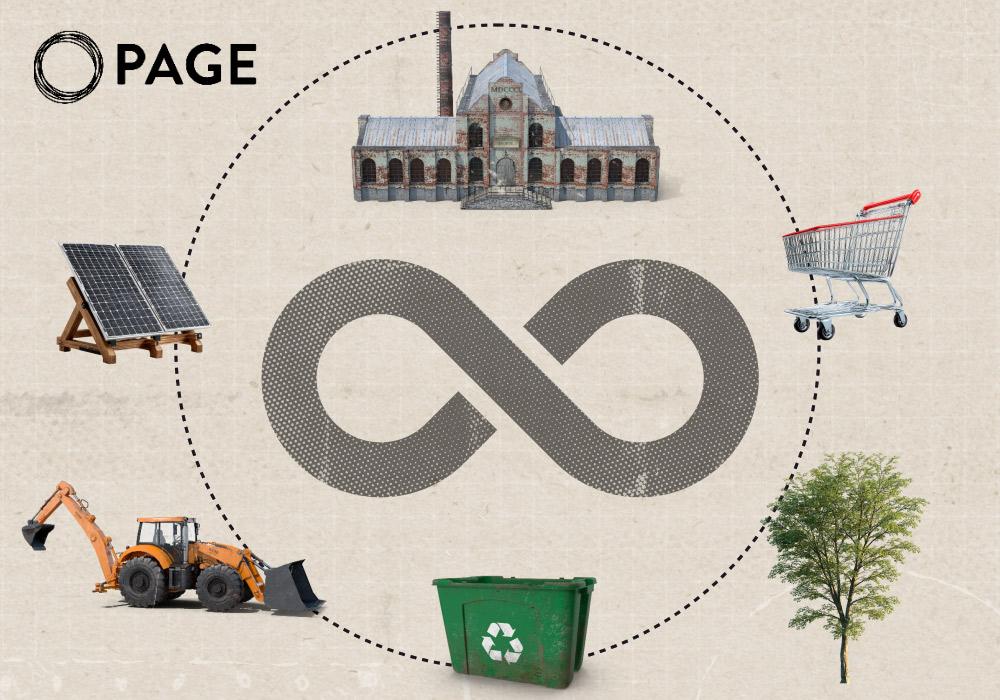
The world is at a critical turning point: today’s dominant economic model, fueled by fossil energy, linear production and consumption, and growth at all costs is driving climate change, biodiversity loss, pollution, and rising inequalities. Yet momentum is growing globally behind a new vision: one that reshapes our economies around sustainability, equity, and human well-being. The transition to an inclusive green economy offers not only a way to protect our planet, but also an opportunity to address past injustices, create decent jobs, and build more resilient societies.
This e-course, Reshaping Our Economies, situates learners in this global shift, offering practical insights into how upstream economic policies, fair transition strategies, and sustainable finance can drive transformative change. Drawing on real-world examples from the Partnership for Action on Green Economy (PAGE)’s 22 partner countries, the course demonstrates how governments, financial institutions, civil society, and businesses can align economic, social, and environmental goals in practice.
Objetivos del aprendizaje
What will you learn?
The overall goal of the course is to show how changes in upstream policy-making (including trade, fiscal, industrial and employment policies) have the potential to shift the whole of the economy towards a green and inclusive transformation.
Upon completion of the self-paced e-course, learners will be able to:
- Explain why upstream economic policies are key levers for achieving sustainable development.
- Identify enabling conditions and specific policy entry points for advancing green, circular, and job-rich economies.
- Outline tools and policies that can help unlock and redirect public and private finance.
- Discuss the social impacts of a green economic transformation and approaches for mitigating negative effects on vulnerable groups.
- Give examples from different countries of how the transition looks like in practice.
Contenido y estructura
The course at a glance:
The course is structured into three distinct modules. Each module has specific learning objectives and features a mix of short introductory videos, interactive lessons, case studies, and exercises. For more information, please refer to the course syllabus.
- Module 1: Economies in transition
- Module 2: Making the transition just
- Module 3: Financing the transition
Metodología
Will you get a certificate?
Participants who complete the course requirements will receive a certificate of completion. To do so, participants must:
- Complete all videos, interactive lessons, and learning activities
- Pass the final quiz with a minimum score of 70% (from no more than three attempts)
Once these requirements are met, the certificate of completion will be available to download automatically.
Público objetivo
Who should take this course?
The course should be of interest to many different groups – including:
- Public sector officials involved in national economic, trade, fiscal, industrial and employment policy, as well as staff from line ministries and sub-national governments
- Professionals working for financial institutions, including private banks and insurance companies
- Representatives from employers and workers associations, civil society groups, universities and think tanks interested in an inclusive green economy transition
The course can also be a useful resource for ministries, development partners, private companies or other entities looking for trustworthy learning products for internal staff training.
Información adicional
This course has been realised with PAGE support
The Partnership for Action on Green Economy (PAGE) is a joint initiative of UNEP, ILO, UNDP, UNIDO and UNITAR that supports countries in advancing inclusive green economy transitions aligned with the 2030 Agenda for Sustainable Development. Since 2013, PAGE has worked with partner governments and institutions to reframe economic policies and practices around sustainability, aiming to promote growth, create jobs, reduce poverty and inequality, and strengthen ecological resilience.
Protección de Datos y Privacidad
Los datos personales de los participantes que solicitan, se registran o participan en los cursos y otros eventos de UNITAR se rigen por la Política de Privacidad y Protección de Datos. Al solicitar, registrarse o participar en este evento, el participante reconoce que conoce dicha política y aceptan sus condiciones.