

Type
Course
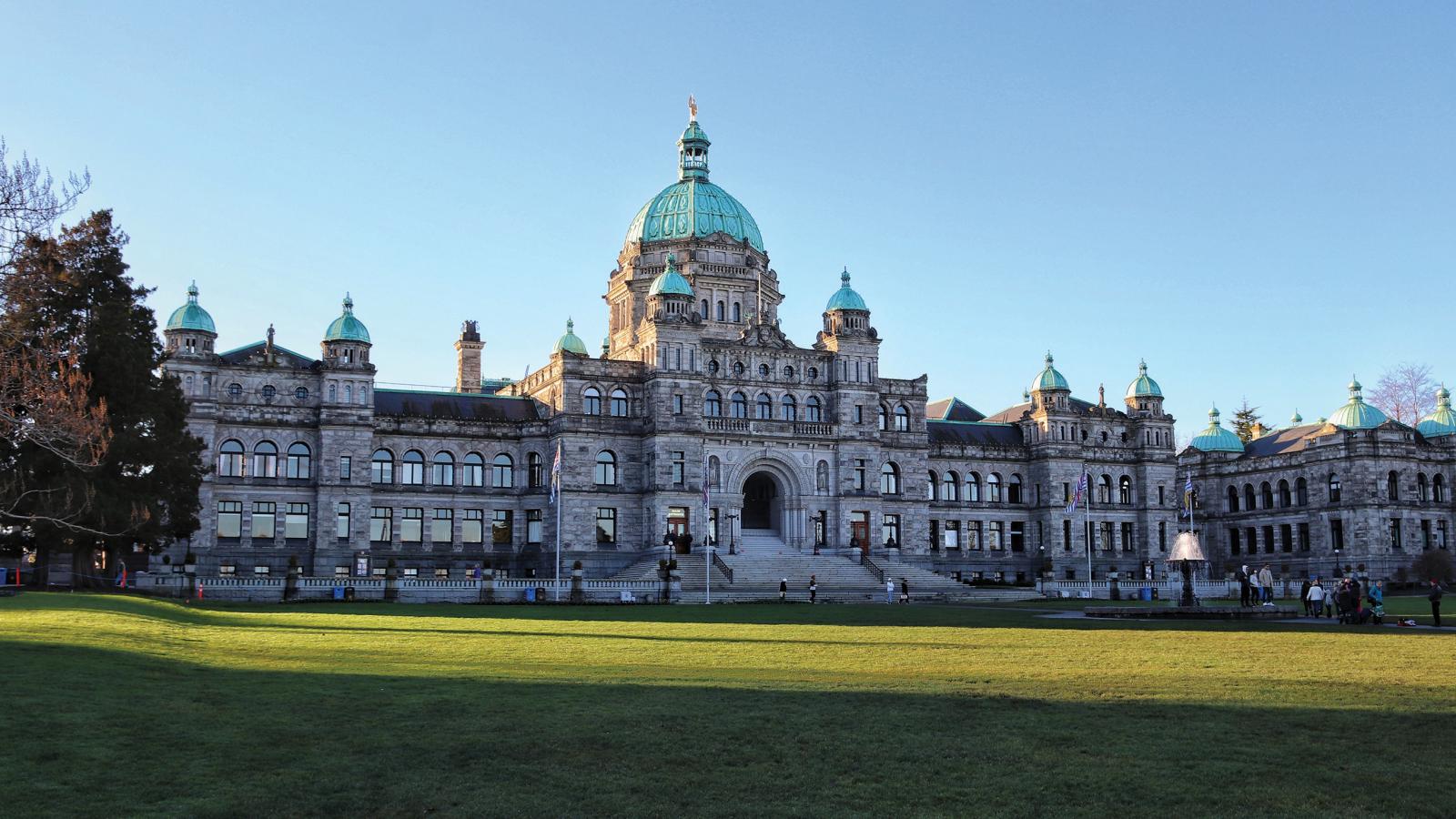
CIFAL Victoria - Micro-credential program in Mapping with Drones
Location
Web-based
Date
-
Duration
21 Hours
Programme Area
Decentralize Cooperation Programme
Registration
Open-registration event
Mode of Delivery
E-learning
Language(s)
English
Pillar
People
Partnership
CIFAL Victoria, University of Victoria
Event Objectives
Capture detailed images from the sky for mapping landscapes and monitoring environmental change. Develop analytical skills to identify real world features and structures in ways that provide detailed assessments of our planet. Participants will feel like you are soaring over the landscape while interacting with our real world datasets.
The Micro-certificate in Mapping with Drones will give participants essential skills for a wide range of industries and hands on experience with new advanced technology. Whether looking to build a professional career or just eager to try something new, this program gives participants the tools to succeed and the opportunity to discover new possibilities for themselves and the planet.
Background
This micro-credential will equip participants with the foundational skills, methods and best practices required to use emerging drone and GIS-technology for low-level aerial land survey, data collection and digital mapping.
Drone technology is an emerging skillset in many Earth-monitoring fields as it can accurately, quickly, and inexpensively map and survey a diverse range of landscapes. You can use drones to create analysis for forestry, conservation, real estate, construction, mining, emergency management, energy, agriculture and transportation use.
This program will show participants how drones and open-source software can perform small drone-based data collection for creating digital 3D and 2D topographical maps.
Topics covered in the program will include:
- flight planning and site selection
- mission planning, drone regulations and controls
- an introduction to photogrammetry, site selection and structure-from-motion (SfM) data processing
- ground control survey, accuracy assessment, and spatial analysis of acquired datasets
- GPS data collection
- Cartographic design
- Muti-criteria decision making with spatial data analysis
Learning Objectives
By the end of the program, students will be able to:
- identify the uses of drone mapping and survey use across various industries
- describe the components of a Remotely Piloted Aircraft System (RPAS) and identify industry-standard terminology and protocols
- plan a structure-from-motion (SfM) photogrammetric survey including a supporting ground control survey
- process SfM imagery with ground control and evaluate positional accuracy
- analyze acquired SfM dataset
- develop a mapping product
- collect, explore, edit, and map spatial data with GPS applications, Google Earth, and QGIS software
- conduct multi-criteria decision making with vector and raster overlay analysis
- complete supervised satellite classifications in QGIS
Content and Structure
Structure
Online Asynchronous delivery style over a 7-week period, requiring approximately 3-6 hours of coursework per week.
Content
Completion of three (3) required courses:
- GISM 01: GIS Skills and Mapping
Join us in the abundant world of data with Geographic Information Systems (GIS). This course focuses on the fundamentals of GIS for in-field employment, and future courses like Mapping with Drones 1 and 2. It is designed for those with little or no prior experience in geomatics. Gain hands-on experience working with spatial data in open-source software – QGIS, Google Earth and Gaia App. Create custom maps with open data, GPS recorded locations and digitized geographic features. Learn to classify landscape characteristics from satellite imagery and answer complex human and environment questions with vector and raster overlay analysis. Participants will leave this course confident in your ability to quantify and visualize spatial data trends for industry, government and business applications.
- MWD 01: Mapping with Drones 1
This course focuses on foundational knowledge and skills needed to operate a small drone and map data output. It is designed for those with little to no experience operating a drone or creating digital maps. Participants will gain hands-on skills and knowledge about drone systems and regulations, flight planning and sensor payloads, as well as how to capture and analyze cartographic output models. Participants will complete applied, real-world projects working with spatial data and a variety of free and open-source software including Open Drone Mapping, QGIS, Google Earth and Map Pilot Pro.
- MWD 02: Mapping with Drones 2
Mapping with Drones 2 builds upon many of the foundational skills covered in the GIS Skills and Mapping with Drones 1 courses. Participants will learn how to conduct specific project applications using advanced flight route planning, Global Navigation Satellite Systems (GNSS), ground control survey and accuracy assessments, ground classification and volume analysis processes. Participants will leave the course with the ability to apply these skills in a variety of work or recreational settings.
Methodology
The MWD program engages professional learners with academics and sector experts in the field. Participants receive regular feedback throughout their learning, and will have multiple avenues to submit evaluative feedback formally and informally during and after their learning experience. Assessment will be hands-on and applicable to real-world use, allowing learners to easily transition their classroom experience to a professional context. Learner assessments will follow standard University undergraduate grading guidelines.
Targeted Audience
As geospatial technologies expand from land-based survey tools to aeronautic and drone-based technology, drone mapping is an accessible technology now used in a growing number of additional industries including, but not limited to:
- Emergency management and search and rescue
- Construction
- Mining
- Surveillance and military
- Insurance
- Real estate, development, and appraisal
- Energy
- Telecommunications
- Environmental restoration
- Transportation and logistics
- Agriculture
This micro-credential will complement those who may want to learn drone mapping skills as part of their current or future career, but do not necessarily have a dedicated background in GIS or a credential in geography. The program will also be of appeal to recent graduates in entry-level careers looking for a dedicated geospatial skillset.
Some of our learners pursue careers in the following roles:
- GIS Specialist
- Geospatial Analyst
- Project Manager
- Land Use Planner
- Transportation Planner
- Environmental Scientist
- Restoration Ecologist
Data Protection and Privacy
The personal data of participants applying for, registering for or participating in UNITAR's training courses and other events is governed by the Data Protection and Privacy Policy. By applying for, registering for or participating in this event, the participant acknowledges that he or she is, (or they are) aware of the policy and agree to its terms.