
Tipo
Course
CIFAL Singapore - Master of Arts in Digital Humanities
Ubicación
Singapore, Singapore
Fecha
-
Duración
273 Days
Área del programa
Risks, Data, Technology and Geospatial Intelligence,
Technology, Artificial Intelligence and Digital Policy
Sitio web
Precio
0,00 US$
Correo Electrónico del Centro de Coordinación del Evento
hass-pgc@ntu.edu.sg
Número del Centro de Coordinación del evento
+65 6592 7784
Inscripción
Open-registration event
Tipo de aprendizaje
Face-to-Face
Idioma(s)
English
Pilar
People
Colaboración
CIFAL Singapore (4209), NIL
Objetivos del evento
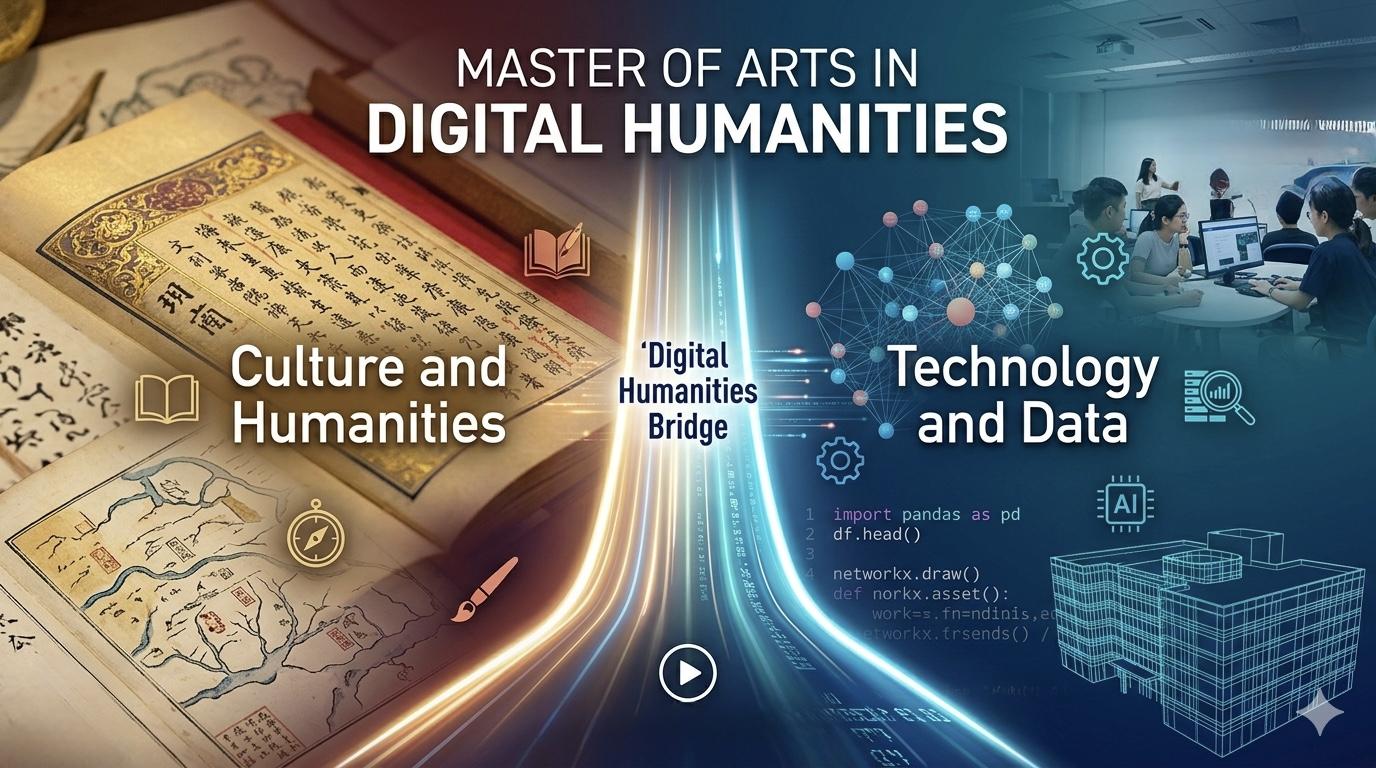
The main goal of this programme is to create a versatile workforce that is equally comfortable with technology and "human" skills like ethics and empathy. It aims to teach tech-savvy students how to apply their skills to social causes, while helping those from arts and social science backgrounds become experts in digital tools. By providing this balanced education, the programme prepares graduates for leadership roles in various industries and creates a path for those who wish to pursue deeper academic research in this emerging field.
Antecedentes
The Master of Arts in Digital Humanities is Singapore’s first programme of its kind, designed to meet the growing demand for professionals who can bridge advanced digital technologies with humanistic inquiry. As societies rapidly digitalise and artificial intelligence becomes integral to work and daily life, there is increasing need to understand how technology both shapes and is shaped by culture and society.
This programme provides a uniquely Asian perspective and equips graduates with both technical competencies and critical human-centred insights, enabling them to navigate and contribute meaningfully to a complex, technology-driven world.
Objetivos del aprendizaje
By the end of the course, students will have mastered several practical and theoretical skills. They will understand the history of how technology and the arts work together and be able to navigate the complex ethics of the digital age. On the technical side, students will learn how to use AI, machine learning, and computer programming to organize and analyse cultural information. Additionally, students will gain the leadership and project management skills needed to run innovative projects that require both technical expertise and social awareness.
Contenido y estructura
Students must complete 30 Academic Units (AUs) to graduate:
- Compulsory Core: 2 courses (6 AUs)
- Discipline-Specific Core: 1 course (3 AUs)
- SHAPE/STEM Core: Depending on background
- Electives:
- 7 courses (21 AUs), or
- 5 courses (15 AUs) + Practicum (6 AUs)
Practicum:
A supervised project with faculty and/or industry partners, culminating in a final report.
Metodología
The programme adopts a blended, interdisciplinary approach combining:
- Foundational theory and ethical grounding
- Technical training (AI, programming, data analytics)
- Cultural and societal analysis
- Active learning (seminars, labs, workshops, discussions)
- Continuous assessment (projects, participation, assignments)
Students benefit from a hands-on “Project Option,” solving real-world problems while developing teamwork and communication skills.
Público objetivo
- Graduates and working professionals from humanities, arts, social sciences, or STEM backgrounds
- Individuals seeking to work at the intersection of technology, culture, and society
- Professionals aiming to upskill in digital tools or develop human-centred technological perspectives
Información adicional
NIL
Protección de Datos y Privacidad
Los datos personales de los participantes que solicitan, se registran o participan en los cursos y otros eventos de UNITAR se rigen por la Política de Privacidad y Protección de Datos. Al solicitar, registrarse o participar en este evento, el participante reconoce que conoce dicha política y aceptan sus condiciones.