

Tipo
Course
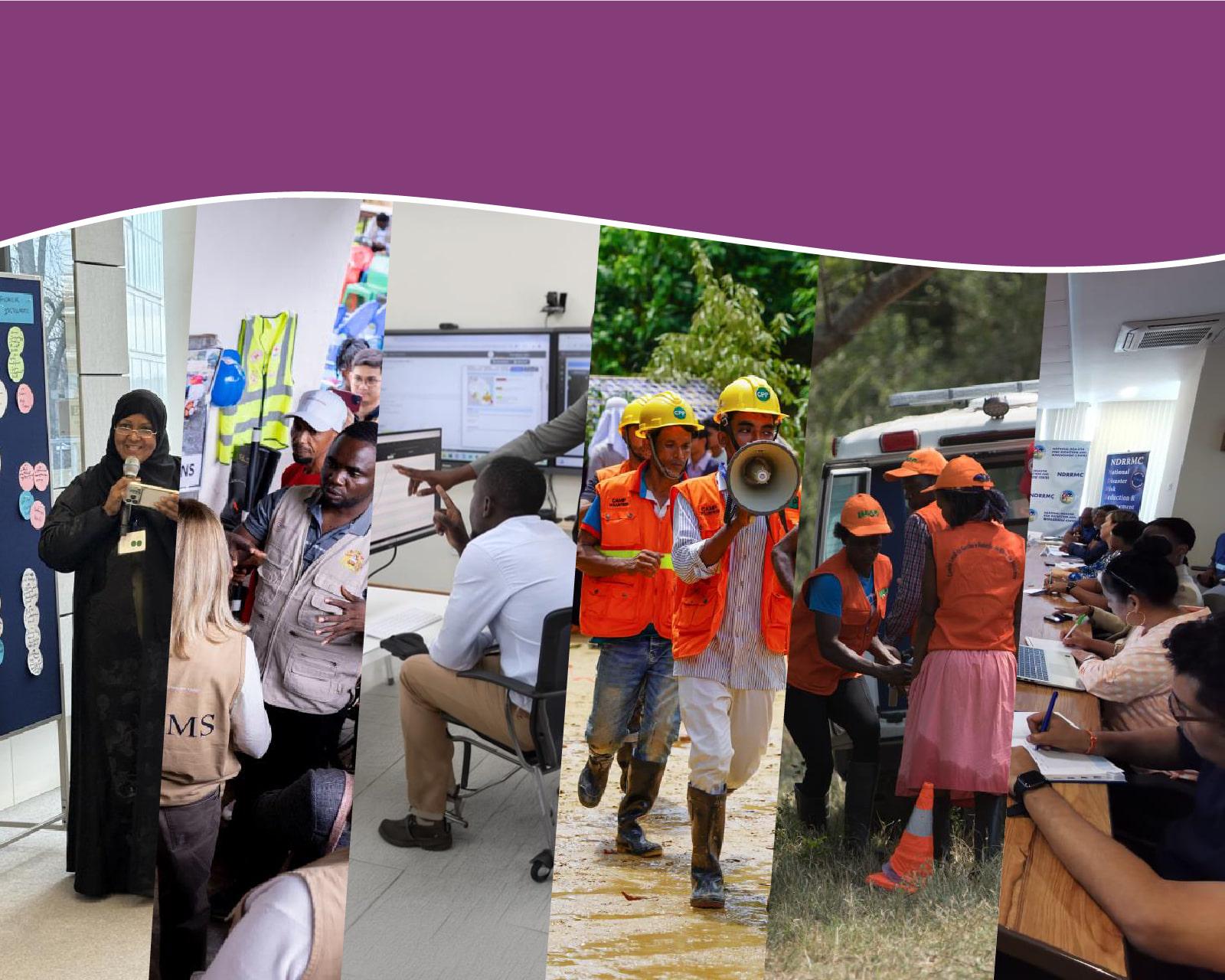
After-Event Review (AER) of Early Warning Systems: Concept, Methodology and Application
Ubicación
Web-based
Fecha
-
Duración
3 Hours
Área del programa
Disaster Risk Reduction,
Data for Decision Making and Policy,
Early Warning and Risk Mapping
Sitio web
Precio
0,00 US$
Correo Electrónico del Centro de Coordinación del Evento
disaster@unitar.org
Inscripción
Open-registration event
Tipo de aprendizaje
E-learning
Idioma(s)
English
Pilar
People
Colaboración
World Meteorological Organization (WMO) (4580), International Federation of Red Cross and Red Crescent Societies (IFRC), International Telecommunication Union (ITU) (1976), United Nations Office for Disaster Risk Reduction (UNDRR) (1347)
Objetivos del evento
This course aims to strengthen individual and institutional capacity to conduct structured, inclusive, and action-oriented AERs of early warning systems, contributing to continuous improvement of EWS performance and strengthened disaster risk reduction outcomes.
The course aims to achieve the following outcomes:
- Strengthened Technical Capacity
- Improved Facilitation and Coordination Skills
- Enhanced Evidence-Based Decision-Making
- Institutionalization of AER Processes
- Contribution to EW4All and DRR Objectives
Antecedentes
This self-paced online course prepares professionals to plan, conduct, and facilitate After-Event Review (AER) within the framework of Early Warning for All (EW4All). AERs are a structured methodology designed to assess the performance of early warning systems following disaster events, with the objective of identifying practical improvements and strengthening institutional readiness.
The course combines conceptual foundations with step-by-step technical guidance, covering planning, data collection, validation workshops, reporting, and follow-up. It also strengthens facilitation and communication skills required to manage complex, multi-stakeholder environments sensitively and effectively.
Designed for government officials, early warning system practitioners, disaster risk reduction professionals, and partners supporting EW4All implementation, the course develops the competencies needed to lead credible, inclusive, and action-oriented AER processes that contribute to continuous system improvement.
Objetivos del aprendizaje
By the end of this course, learners will be able to:
- Describe the purpose and value of AERs within the framework of Early Warning for All (EW4All) Initiative
- Explain the stages of planning and implementing an AER process from initiation to follow-up, including how the methodology may be adapted to different contexts
- Identify the tools and procedures used to collect, analyse, and synthesise information within an AER process
- Describe how AER findings are translated into structured recommendations and action plans
- Outline a range of interpersonal styles and approaches needed by AER facilitators
Contenido y estructura
The course is organized into three modules, each designed with specific lessons that deliver the main content. Supplementary resources, including publications are presented alongside the modules, allowing participants to access additional materials as needed.
The objective of the modular structure is to ensure that the lessons are aligned with each module’s topic and are distributed accordingly across modules. It also provides participants with flexibility to explore additional materials freely based on their learning needs, without being restricted to a prescribed path.
Modules covered in this course include:
- Module 1: Foundations of AERs
This module introduces the purpose and value of AERs in strengthening EWS. It presents the conceptual foundations of the methodology, including the EWS value cycle, effectiveness dimensions, and the systems–agents–institutions framework, and provides an overview of the AER process from initiation to follow-up. - Module 2: Building the Evidence Base
This module focuses on the planning and preparation of an AER, including defining objectives and scope, identifying stakeholders, selecting the appropriate review format, and establishing the AER team. It provides practical guidance on evidence collection methods and supports learners in systematically organizing and analysing information. - Module 3: Validation, Reporting and Follow-up
This module covers the design and facilitation of validation workshops to consolidate findings and promote multi-stakeholder dialogue. It introduces key analytical approaches and guides learners in translating findings into structured recommendations and action plans. The module also addresses reporting, dissemination, and follow-up processes to support implementation and institutional learning.
Metodología
The course is based on UNITAR’s adult learning pedagogical principles and will be delivered via the e-Learning platform Moodle. This pedagogical tool will help the participants meet the course’s learning objectives through self-paced study routine supported by supplementary resources, useful materials, and interactive scenario-based exercises.
Materials will be posted on the e-Learning platform. The course is divided into three modules which contain the same structural elements:
- Content
- Learning Objectives
- Module Assessment
- Supplementary Resources
Público objetivo
The course is designed for a multidisciplinary audience involved in the design, implementation, use, and evaluation of early warning systems and broader disaster risk management processes. Primary target groups include:
- Government stakeholders including National Disaster Risk Management Authorities (NDRMAs), National Meteorological and Hydrological Services (NMHSs), sectoral ministries (e.g., water, agriculture, health, infrastructure), as well as subnational and local authorities responsible for preparedness and response;
- Technical and operational practitioners, such as early warning system specialists, risk analysts and forecasters, emergency management and response personnel, and professionals responsible for data and information management;
- Facilitators and partners supporting early warning and disaster risk reduction efforts, including UN agencies, international organizations, the Red Cross and Red Crescent Movement, non-governmental organizations, civil society actors, and regional or technical institutions;
- Additional stakeholders, including researchers and academic institutions, private sector actors involved in communication and dissemination systems, and development partners supporting EWS and DRR strengthening.
Información adicional
Study Plan
The course is designed in a way to give the participants flexibility to plan their learning progress. The lessons, assessments, and resources of all modules can be accessed throughout the course. Thus, they will only need to complete all the required activities to obtain a certificate of completion.
Grading Policy and Course Completion
Participants are eligible for course certification upon successful completion. Successful completion requires:
- Module Assessments
- Course Evaluation
Protección de Datos y Privacidad
Los datos personales de los participantes que solicitan, se registran o participan en los cursos y otros eventos de UNITAR se rigen por la Política de Privacidad y Protección de Datos. Al solicitar, registrarse o participar en este evento, el participante reconoce que conoce dicha política y aceptan sus condiciones.