
UNITAR Online Catalogue
UNITAR RISE-LAB 2026 Sudan Phase One: (Webinar 1) Food Security Challenges in Sudan: From Needs to Local Solutions
Prosperity
Background
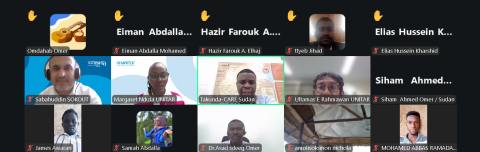
The webinar “Food Security Challenges in Sudan: From Needs to Local Solutions” was delivered as part of Phase One of UNITAR RISE-LAB 2026. The session was led by Mr Takunda Ruvaro, Resilience and Development Portfolio Team Leader at CARE Sudan. It introduced participants to the current food-security situation in Sudan and examined how conflict, market disruption, declining agricultural productivity, livelihood losses and gender inequalities affect farmers, households and communities. Drawing on CARE Sudan’s field experience and community-level evidence, the session connected these challenges with practical, locally led responses and potential entrepreneurship opportunities.
Event Objectives
The webinar aimed to strengthen participants’ understanding of food security in the Sudanese context and help them connect broad food-security challenges with problems experienced by communities and local markets. It sought to expose participants to evidence from different parts of Sudan, demonstrate how conflict affects agricultural production and livelihoods, introduce practical responses being implemented by communities and development actors, and encourage participants to consider how locally identified challenges could be translated into viable and sustainable entrepreneurial opportunities.
Learning Objectives
By the end of the webinar, participants were expected to explain the four dimensions of food security: availability, access, utilization and stability; identify major factors affecting food security and agricultural livelihoods in Sudan; describe how conflict, market disruption and gender inequalities affect farmers and communities; connect community needs with practical, locally led interventions; and explore how selected food-security challenges could be addressed through entrepreneurship.
Content and Structure
The session began with an overview of CARE Sudan’s operational presence and the wider food-security context in the country. It introduced the four dimensions of food security and examined their connection with agricultural production, income, markets, transport, nutrition, climate resilience and household coping mechanisms.
The webinar then presented field-based evidence on declining agricultural productivity, destruction of crops and farming equipment, rising input costs, insecurity on farmland, labour shortages and reduced access to agricultural land. Particular attention was given to the impact of conflict on women farmers, including barriers related to land access, financing, storage, agricultural inputs and market participation.
The session also examined disruptions to markets and distribution systems, increased transportation costs, unstable agricultural prices, loss of employment and limited livelihood diversification. Community perspectives and examples from CARE’s programming were used to illustrate these challenges.
The final part of the webinar focused on practical responses and potential areas for entrepreneurship, including value addition and food processing, agricultural input and tool supply, transport and logistics, service provision, irrigation and solar solutions, digital technologies and other locally relevant business opportunities.
Methodology
The webinar used an evidence-based and practical learning approach. Presentations were combined with statistics, field findings, charts, community perspectives, real examples from CARE Sudan’s programmes and experiences from affected communities. This helped participants compare the challenges presented during the webinar with conditions in their own communities.
The session moved progressively from understanding food security and identifying challenges to considering practical interventions and entrepreneurial responses. Participants were encouraged to reflect on how the evidence and examples could help them better understand the problem or opportunity they are exploring during Phase One and refine their own entrepreneurial ideas.
Targeted Audience
Participants already been selected for Sudan and South Sudan Training Programmes.
Additional Information
The webinar was delivered in collaboration with CARE Sudan and presented by Mr Takunda Ruvaro, Resilience and Development Portfolio Team Leader. The presentation drew extensively on CARE Sudan’s operational experience, field assessments and community perspectives across different parts of Sudan.
The session contributes to the wider objectives of UNITAR RISE-LAB 2026 by strengthening participants’ understanding of food security and sustainable livelihoods while encouraging them to transform locally identified challenges into practical and context-appropriate entrepreneurial responses. The programme is delivered by UNITAR’s Division for Prosperity through the RISE-LAB team with support from the Government and People of Japan.