UNITAR Online Catalogue
CIFAL Nigeria - Clean Rivers Initiative: A Mass Literacy Program on Sustainable Waste Management and Public Health Safety
People
Health, Environment and You , CIFAL Nigeria, Rivers State Waste Management Agency
Background
Nigeria faces significant challenges in sustainable waste management, particularly in urban centers such as Port Harcourt, Rivers State. Improper waste disposal, especially dumping refuse in drains and rivers, contributes to flooding, environmental degradation, water contamination, and public health risks.
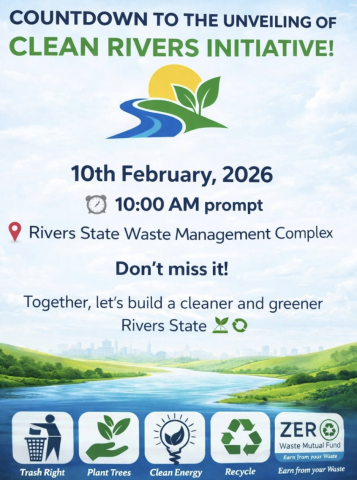
The Clean Rivers Initiative (CRI), supported by CIFAL Nigeria in collaboration with Health, Environment and You and other partners, was officially launched on February 10, 2026. The initiative seeks to bridge the gap between waste generation and responsible disposal through education, behavioral transformation, and multi-stakeholder collaboration.
The program emphasizes community ownership, youth leadership, and practical solutions to foster a cleaner, healthier, and more sustainable urban environment.
Event Objectives
The Clean Rivers Initiative aims to:
- Promote mass literacy on sustainable waste management practices;
- Encourage responsible waste disposal behaviors and discourage dumping into drains and rivers;
- Improve public health outcomes by reducing environmental contamination;
- Reduce plastic waste and promote waste sorting and recycling;
- Support waste-to-wealth opportunities, particularly among youth;
- Strengthen partnerships between government agencies, civil society, and communities for sustainable impact.
Content and Structure
1. Official Launch Event
- Held at the Rivers State Waste Management Agency (RIWAMA) Complex, Port Harcourt
- Public awareness speeches and stakeholder engagement
2. Behavioral Change Campaigns
- Public sensitization campaigns promoting the message:
“Drainage is not a dumpsite.” - Community education on waste sorting and responsible disposal
3. Mass Literacy Activities
- Workshops and outreach sessions on sustainable waste management
- Public health education sessions linking sanitation and disease prevention
4. Intergenerational Dialogue
- Youth engagement forums
- Empowering young Nigerians as sustainability champions
- Promoting innovation in environmental solutions
5. Multi-Stakeholder Coordination
- Collaboration with RIWAMA and other agencies to improve waste collection systems
- NGO partnerships to expand outreach and community mobilisation
Methodology
- Community-based participatory learning
- Public awareness campaigns
- Behavioral change communication strategies
- Intergenerational dialogue
- Multi-sector partnership model
- Advocacy and public sensitization
The initiative combines environmental education with practical action and civic engagement to create long-term behavioral transformation.
Targeted Audience
- Residents of Rivers State
- Youth and student groups
- Community leaders
- Local government officials
- Environmental NGOs
- Waste management stakeholders
- Informal waste sector participants